Home » The Definitive Guide to Professional Paint Correction Services: Our ‘Preservation-First’ Approach
The Definitive Guide to Professional Paint Correction Services: Our ‘Preservation-First’ Approach
The Core Difference: From ‘Buffing’ to Clear Coat Science
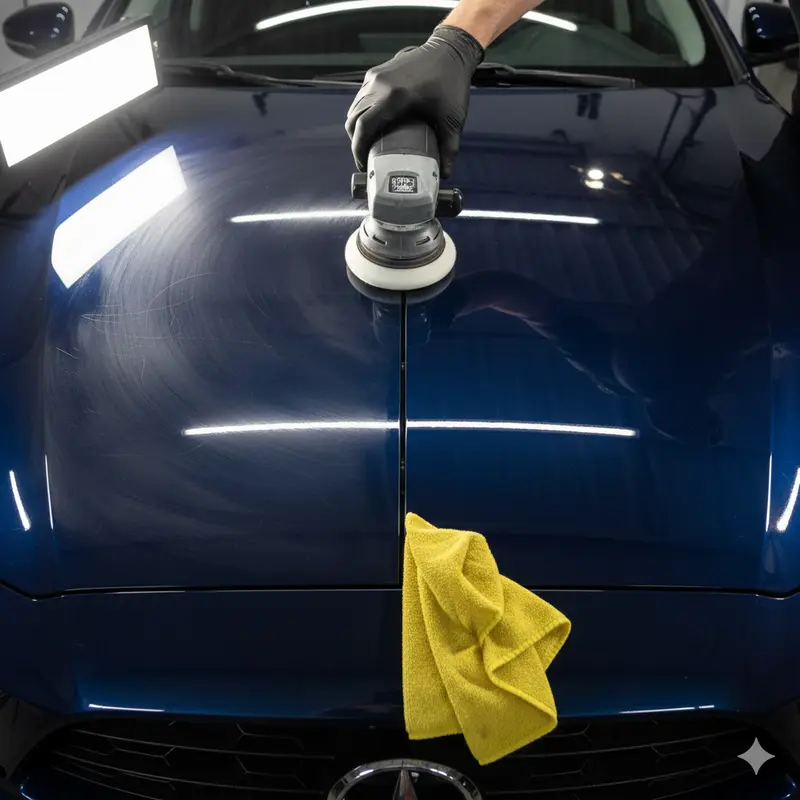
Many confuse paint correction with a quick detailer’s “buffing” service. The difference is permanence. Traditional waxing or glazing merely fills defects, masking them with oils and waxes that wash away after a few weeks, allowing the imperfections to reappear. A professional Paint Correction Service, as executed by Polished Image Auto Detailing, is a permanent, restorative process that functions by:- Controlled Abrasion: Using specialized rotary and orbital polishers, paired with diminishing abrasive compounds, to remove a microscopic layer of the damaged clear coat.
- Surface Leveling: The goal is to safely reduce the clear coat layer until the surface is level with the bottom of the deepest scratch that can be permanently corrected.
- Restored Optical Clarity: A smooth, level surface reflects light uniformly, eliminating the diffused, hazy look of swirls and restoring a deep, mirror-like gloss that lasts.
The Polished Image ‘Preservation-First’ Service Protocol
Our decades of experience, particularly with exotic and classic vehicles, have led us to develop a non-negotiable, multi-step protocol for every vehicle we service. This system is designed to provide predictable, world-class results while prioritizing the long-term health of your vehicle’s paint.Step 1: Initial Assessment & Thickness Analysis (The Data)
This is the most critical step—one often skipped by less experienced detailers. Before a single machine touches your paint, we conduct a full-panel Paint Thickness Gauge (PTG) analysis.- Why it Matters: The PTG measures the total thickness of your paint system (primer, base coat, and clear coat) in microns or mils. This objective data dictates the safe limit for abrasion. Without this data, any correction is an educated guess, risking a complete clear coat failure.
- Our Promise: We use the PTG data to develop a correction strategy that is the Least Aggressive Method (LAM) necessary to achieve your desired results, ensuring maximum clear coat preservation.
Step 2: Multi-Stage Decontamination
Correction must only be performed on a surgically clean surface. Our thorough decontamination process includes:- Deep Wash: Utilizing the two-bucket method and pH-neutral soap.
- Chemical Decontamination: Application of iron and fallout removers to dissolve bonded industrial contaminants.
- Mechanical Decontamination: A meticulous clay bar treatment to lift remaining embedded contaminants like tar and tree sap.
Step 3: The Test Spot & Customized Approach
The true mark of a professional Paint Correction Service is the Test Spot. We choose an inconspicuous area to determine the perfect combination of polisher speed, pad type, and compound aggressiveness required for your specific paint.- This test determines if your paint requires a soft refining polish (Enhancement) or a heavy cutting stage (Full Correction).
- We use specialized LED inspection lighting to mimic direct sunlight, allowing us to accurately identify and remove all micro-marring before proceeding to the entire vehicle.
Why Paint Thickness Data is Central to Our Service
The PTG is not a suggestion—it is the governing factor in our professional service. The factory clear coat averages between 30 and 100 microns (1.2 to 4.0 mils). A typical, high-quality Stage 2 Correction may safely remove between 2 and 5 microns. Polished Image Auto Detailing is committed to providing you with this data. We will share the before-and-after readings, giving you an objective, unassailable measure of the care and precision applied to your vehicle. This commitment to measurable preservation is the assurance our high-end clientele expect.The Value of Investing in Professional Paint Correction Services
Choosing a professional service over a cheap, quick detail is an investment with tangible returns:- Increased Resale Value: A flawless, deep-gloss finish is a significant selling point, often yielding a higher return than the cost of the service itself.
- Optimal Ceramic Coating Bonding: Paint correction creates a pristine surface for Ceramic Coating to chemically bond, maximizing its lifespan, hydrophobic properties, and protective strength.
- True Aesthetic Transformation: We eliminate the source of the dullness, not just hide it. The result is a vibrant, wet-look depth of color that a simple wash or wax cannot replicate.
The Critical Next Step: Protecting Your Perfect Finish
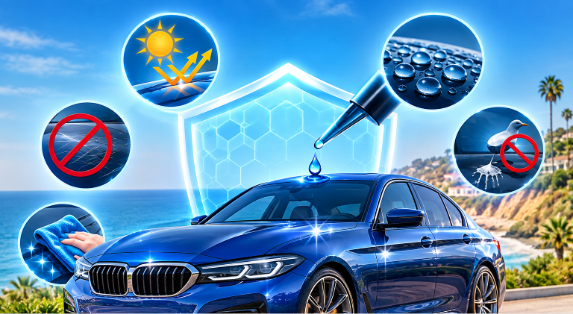
Once your paint is corrected, the clear coat is pristine but bare. The final step is crucial: protecting that new, flawless surface. We advise pairing our Paint Correction Services with our premium Ceramic Coating packages. This creates a durable, sacrificial barrier that provides years of protection against UV damage, chemical etching, and future swirl marks, ensuring your corrected finish is locked in for the long term.Ready to Restore Your Vehicle’s Legacy? Get a Personalized Paint Correction Quote
If your vehicle’s finish is compromised by swirl marks, oxidation, or scratching, trust the expertise of Polished Image Auto Detailing. With over 30 years of experience specializing in everything from everyday vehicles to classic car collections, we offer a specialized, Preservation-First approach backed by objective paint data and a 100% Satisfaction Guarantee. We don’t just correct paint; we restore confidence. Contact us today for a comprehensive assessment and a custom quote based on the specific needs of your vehicle’s finish.Frequently Asked Questions
Yes, paint correction improves your vehicle’s appearance by restoring gloss and removing imperfections, which can help increase resale value.
Yes, even new vehicles often have swirl marks or minor paint defects from transportation and dealership washing that paint correction can safely remove.
It’s best to remove personal belongings and avoid applying waxes or sealants before your appointment for the most accurate paint assessment.
Paint correction can improve mildly faded paint by removing oxidation and restoring shine, depending on the condition of the clear coat.
Use proper hand washing techniques, microfiber towels, and protective coatings to preserve the corrected finish and prevent new swirl marks.