How Professional Fleet Washing in Vista Prevents Salt Damage
Vista, California sits just a few miles from the Pacific coastline, close enough that the marine layer rolls in most mornings and salt-laden air is a fixture of the regional climate throughout the year. For residents, that ocean proximity is a quality-of-life asset. For fleet operators running commercial trucks and work vehicles in the area, it is a slow, relentless source of asset damage that most businesses dramatically underestimate — until the repair bills arrive.
Salt corrosion is the single most destructive environmental force acting on commercial vehicles in coastal Southern California. It attacks metal surfaces silently and continuously, working its way into frame rails, brake components, wheel wells, undercarriage hardware, and body panels with a persistence that neither distance from the ocean nor periodic rainfall can neutralize. For Vista fleets operating without a consistent professional washing program, the cumulative cost of deferred corrosion damage can run into tens of thousands of dollars per vehicle over the asset lifecycle.
This article examines exactly how salt damage occurs, what it costs Vista fleet operators over time, and how professional truck fleet washing in Vista — executed with the right methods, frequency, and equipment — interrupts the corrosion cycle before it can take hold. Companies like Polished Image Auto Detailing have built their fleet service model around this specific challenge, delivering washing programs that protect commercial assets from the ground up.
Understanding Salt Corrosion: The Science Behind the Damage
To appreciate why professional fleet washing in Vista is such a critical investment, it helps to understand the mechanism by which salt actually destroys metal. The process is electrochemical in nature — salt (sodium chloride) dissolves in water to create an electrolyte solution that dramatically accelerates the oxidation of iron and steel. In practical terms, this means that a commercial truck operating in a salt-air environment corrodes significantly faster than the same vehicle operating in a dry inland climate, even without ever driving on a salted road.
How Coastal Salt Gets Into Your Fleet
Many fleet operators assume that salt damage is primarily a road hazard — the kind of thing that affects vehicles in northern states where roads are treated with salt or brine during winter. That assumption causes Vista fleet managers to underestimate their own risk. In coastal North County San Diego, the salt exposure pathway is atmospheric rather than road-based. Salt particles aerosolized by wave action travel inland on prevailing ocean winds, settling on every exposed surface they encounter. Vehicles parked overnight accumulate a measurable salt film even without driving anywhere near the beach.
Once a salt film is established on a vehicle surface, it behaves as a moisture magnet. Salt is hygroscopic — it draws water vapor from the surrounding air and holds it against the metal surface continuously. This means the corrosion process runs not just during rain events but around the clock, driven by nothing more than normal coastal humidity. For Vista fleets that are parked overnight and then driven through morning marine layer conditions, the salt and moisture combination is exceptionally aggressive.
Where Salt Damage Strikes First
Salt corrosion does not attack a commercial vehicle uniformly. It concentrates in specific areas where salt deposits accumulate and moisture is retained, and understanding those areas helps fleet managers appreciate exactly what professional truck fleet washing in Vista is designed to address.
- The Undercarriage: This is the highest-risk zone on any commercial vehicle. Wheel spray and road splash coat the frame rails, cross members, suspension components, brake lines, fuel lines, and exhaust system with a continuous film of road grime mixed with salt aerosols. The undercarriage is also the most difficult area to clean adequately without professional equipment, which is why deferred washing damage concentrates here.
- Wheel Wells and Brake Hardware: The enclosed geometry of wheel wells traps salt-laden moisture and grime, creating sustained contact between corrosive deposits and brake backing plates, caliper hardware, and wheel bearing assemblies. Brake component corrosion in coastal fleets is a significant safety concern as well as a maintenance cost driver.
- Door Seams, Panel Joints, and Hinges: Salt penetrates the micro-gaps between body panels, door frames, and structural members by capillary action, establishing corrosion colonies inside the joints that are invisible from the exterior until the damage is well advanced.
- Cab Mounting Points and Frame Rails: The structural frame of a commercial truck is its highest-value component. Corrosion in frame rails can compromise structural integrity, create out-of-specification flex points, and in severe cases make a vehicle unsafe for continued operation — long before the exterior shows visible rust.
- Electrical Connections and Ground Points: Salt corrosion on electrical terminals and ground connection points creates resistance that degrades lighting reliability, sensor performance, and charging system function. Corroded grounds are a leading cause of intermittent electrical faults in coastal commercial fleets.
The True Cost of Salt Damage to Vista Fleet Operators
Fleet managers who have not yet quantified the financial impact of deferred washing and salt corrosion often underestimate it significantly. The costs manifest across several categories simultaneously, and their cumulative effect on fleet operating costs and total cost of ownership is substantial.
Accelerated Component Replacement Cycles
Brake components — pads, rotors, calipers, and hardware — that are regularly subjected to coastal salt exposure without adequate washing can see their service life reduced by 30 to 50 percent compared to manufacturer expectations developed under standard operating conditions. For a Vista fleet running 20 or more vehicles, the compounded cost of shortened brake service intervals across the entire fleet represents a significant annual maintenance line item that is directly attributable to inadequate corrosion management.
Suspension components, wheel bearings, U-joints, and steering hardware are similarly affected. The labor cost of replacing corroded fasteners and seized components during what should be routine service adds hours to every maintenance event — costs that rarely appear as a separate line in the maintenance budget but consistently inflate it.
Structural Frame Damage and Shortened Vehicle Life
Heavy structural corrosion in frame rails and cab mounting points is the most financially consequential form of salt damage in commercial fleets. A vehicle with compromised frame integrity cannot be economically repaired — the cost of structural remediation typically exceeds the vehicle’s residual value. Fleet operators who discover severe frame corrosion are faced with an early replacement decision for an asset that should have had years of productive service remaining. Professional fleet washing in Vista, by interrupting the corrosion process before it reaches structural components, directly extends the useful life of each vehicle in the fleet.
Resale Value Destruction
Commercial trucks and work vehicles that show visible corrosion, pitted undercarriage components, and surface rust sell at a meaningful discount in the secondary market. For Vista businesses that rotate fleet vehicles on a 5-to-7-year replacement cycle, the resale value of each outgoing vehicle is a real component of fleet cost management. Vehicles maintained under a regular professional fleet washing program consistently command higher secondary market prices than comparable units that show the cosmetic and structural evidence of deferred care.
DOT Inspection and Compliance Risk
Severely corroded brake lines, fuel lines, and frame components can trigger deficiency findings during FMCSA and California DOT roadside inspections. An out-of-service order on a commercial vehicle is an immediate and direct revenue loss — the vehicle cannot work while the deficiency is remediated, and the compliance record impact can affect the carrier’s safety rating. Professional fleet washing in Vista that includes systematic undercarriage cleaning is a meaningful contribution to maintaining the kind of mechanical condition that passes inspection consistently.
Why Standard Washing Methods Are Not Enough
Some Vista fleet operators attempt to manage salt corrosion through in-house washing programs — employees with garden hoses or basic pressure washers at the yard, or periodic runs through commercial car washes designed for passenger vehicles. While these efforts are better than nothing, they consistently fall short of the standard required for effective corrosion prevention on commercial vehicles.
The Undercarriage Access Problem
Standard wash bays and consumer-grade pressure washers are simply not designed to deliver adequate water pressure and coverage to commercial vehicle undercarriages. The combination of vehicle height, complex undercarriage geometry, and the tenacity of salt-contaminated grime means that surface-level washing — even with pressure — leaves the highest-risk zones largely unaddressed. Professional truck fleet washing in Vista uses purpose-built undercarriage wash systems that deliver high-volume, high-pressure water coverage to the entire undercarriage simultaneously, flushing salt deposits from frame rails, suspension, and brake hardware that a standard wash cannot reach.
Water Temperature and Detergent Chemistry
Cold-water washing removes visible surface grime but is far less effective at dissolving and flushing the salt film that drives electrochemical corrosion. Professional fleet washing operations use heated water combined with purpose-formulated, pH-balanced detergents designed specifically for commercial vehicle surfaces and metal protection. These chemistries emulsify salt deposits, neutralize acidic road film, and prepare surfaces for post-wash protective treatments in a way that basic soap and water cannot replicate.
Post-Wash Corrosion Inhibitor Application
The most significant advantage of professional fleet washing over in-house programs is access to post-wash corrosion inhibitor treatments. After a thorough wash and rinse cycle, professional technicians can apply undercoating inhibitors and surface protectants that create a physical barrier between the metal and the salt environment. Polished Image Auto Detailing offers corrosion inhibitor application as a standard component of their fleet washing programs for Vista clients, significantly extending the interval between corrosion-accelerating salt accumulation events.
What Professional Truck Fleet Washing in Vista Actually Looks Like
Understanding the specific process that professional fleet washing in Vista involves helps fleet managers evaluate service providers and ensure they are receiving the protection their assets require.
Pre-Wash Inspection
A quality professional fleet washing service begins with a visual inspection of each vehicle before washing commences. This step identifies areas of existing corrosion concern, mechanical deficiencies that the wash technician should be aware of, and specific problem zones — leaking seals, damaged undercoating, heavily packed grime — that require focused attention during the wash cycle. Polished Image Auto Detailing incorporates this pre-wash assessment into every fleet service visit, giving fleet managers visibility into emerging issues before they become costly repairs.
High-Pressure Undercarriage Flush
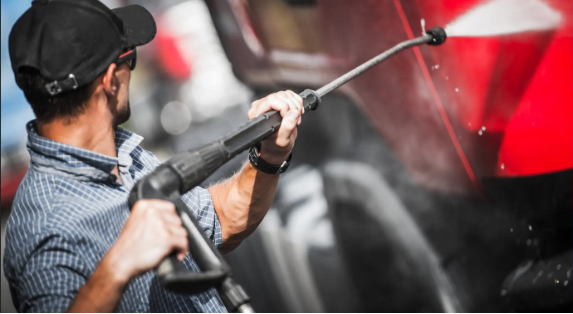
The undercarriage flush is the most critical component of salt corrosion prevention washing and the step that most clearly differentiates professional service from in-house efforts. Using high-pressure systems with purpose-designed undercarriage spray bars or rotating nozzle arrays, professional technicians deliver a thorough high-volume flush to all undercarriage surfaces — frame rails, axles, suspension, brake hardware, and fuel and brake line routing. The goal is complete salt and grime removal from every surface that cannot be reached by a standard wash approach.
Full Exterior Wash and Rinse
Following the undercarriage flush, the full exterior of each vehicle is washed using commercial-grade detergents and hot water delivery systems. Cab, trailer, wheel wells, mirrors, running boards, and all exterior surfaces are cleaned systematically. For Vista fleets operating in industries where vehicle appearance directly affects client perception — service companies, delivery operations, branded fleet vehicles — the exterior wash is also a brand maintenance function, not only a corrosion prevention one.
Wheel and Tire Treatment
Wheels and tires receive focused attention in a professional fleet washing program. Brake dust, road grime, and salt accumulation on wheel faces and inside wheel wells are addressed with appropriate brushing and rinse techniques. Clean wheels are not only a cosmetic outcome — they enable earlier visual detection of brake hardware corrosion, tire sidewall deterioration, and wheel seal leaks that would otherwise be obscured by grime buildup.
Corrosion Inhibitor and Protective Coating Application
For maximum corrosion protection, professional fleet washing in Vista should conclude with the application of appropriate inhibitor treatments to the undercarriage and vulnerable metal surfaces. These products range from spray-applied wax and sealant treatments for exterior painted surfaces to purpose-formulated undercoating inhibitors for frame and suspension components. Polished Image Auto Detailing tailors its protective treatment recommendations to each fleet’s specific vehicle types, operational environments, and maintenance intervals, ensuring that the protection applied matches the actual corrosion risk the fleet faces.
Building a Fleet Washing Schedule That Actually Protects Against Salt Damage
Frequency is as important as technique when it comes to salt corrosion prevention. A single thorough wash followed by weeks of salt accumulation provides far less protection than a consistent washing schedule that keeps salt loading below the threshold at which corrosion accelerates. The right schedule for a Vista fleet depends on several operational factors.
Factors That Determine Washing Frequency
- Proximity to the coast: Fleets based within 5 miles of the Pacific coast face heavier atmospheric salt loading and benefit from more frequent washing than those based farther inland in the Vista area.
- Vehicle type and undercarriage exposure: Low-clearance vehicles and those with complex undercarriage geometry — dump trucks, concrete mixers, heavy equipment haulers — accumulate undercarriage contamination faster and warrant more frequent undercarriage flushing.
- Operational environment: Vehicles that regularly operate near the beach, in marine industrial areas, or on unpaved coastal roads pick up concentrated salt loads beyond the baseline atmospheric exposure.
- Season and weather patterns: Late fall and winter months in North County San Diego bring increased rainfall, which both mobilizes accumulated salt deposits and increases the moisture availability that drives electrochemical corrosion. Washing frequency during these periods is particularly important.
- Vehicle age and existing coating condition: Older vehicles with deteriorated factory undercoating or prior corrosion are more vulnerable and benefit from more frequent washing combined with inhibitor treatment.
Recommended Washing Intervals for Vista Fleets
Polished Image Auto Detailing recommends the following general framework for Vista commercial fleet operators, subject to adjustment based on the specific factors above:
- Light-duty service vehicles and vans operating in standard Vista commercial use: Full exterior wash every 2 to 3 weeks; undercarriage flush monthly.
- Medium and heavy-duty trucks in construction, landscaping, or utility service: Full exterior wash weekly to bi-weekly; undercarriage flush every 2 weeks.
- Fleets operating within 5 miles of the coast or in heavy salt-exposure environments: Full exterior wash weekly; undercarriage flush weekly, with corrosion inhibitor application monthly.
- All fleet vehicles, regardless of type: Post-heavy-rain washing is recommended to flush mobilized salt deposits before they dry and re-concentrate on surfaces.
California Environmental Compliance and Professional Fleet Washing
Fleet operators considering mobile or on-site washing in Vista should be aware that California has specific wastewater discharge regulations that apply to commercial vehicle washing operations. Wash water from commercial vehicle cleaning contains oil, grease, heavy metals, detergent chemicals, and other regulated substances that cannot legally be discharged to storm drains or unpaved surfaces under state and regional water quality standards.
Professional fleet washing providers operating in California are required to use water reclamation and containment systems that collect wash water for proper disposal or treatment. Polished Image Auto Detailing operates in full compliance with California statewide stormwater requirements and North County regional discharge standards, using mobile containment berms, vacuum recovery systems, and licensed wastewater disposal protocols that protect Vista businesses from compliance liability.
Fleet operators who use non-compliant in-house washing methods — allowing wash water to run off into parking lot drains or soil — face potential enforcement action from regional water quality boards. Contracting with a professional, compliant fleet washing provider eliminates this risk entirely while delivering superior washing outcomes.
The Brand and Business Case: Clean Fleets Are a Competitive Asset
Beyond the mechanical and financial case for corrosion prevention, professional fleet washing in Vista delivers a business benefit that fleet operators sometimes overlook: the impression your vehicles make on clients, prospects, and the broader public.
Commercial trucks and service vehicles are among the most visible brand assets a Vista business operates. A clean, well-maintained fleet communicates professionalism, operational discipline, and respect for the customer relationship. A fleet that shows road grime, salt haze, surface oxidation, and visible neglect communicates the opposite — and that impression is often made before a technician rings a doorbell or a driver delivers a load.
In competitive North County San Diego markets — construction, landscaping, plumbing, electrical, HVAC, delivery logistics — where multiple qualified providers compete for commercial and residential accounts, fleet presentation is a meaningful differentiator. Polished Image Auto Detailing works with Vista businesses that understand this dynamic, helping them maintain fleet appearance standards that actively support their brand positioning rather than undermining it.
Choosing the Right Fleet Washing Provider in Vista
Not all commercial fleet washing services are equipped to deliver the corrosion-prevention outcomes that Vista’s coastal environment demands. When evaluating fleet washing providers, Vista fleet managers should consider the following criteria:
Undercarriage washing capability. Ask specifically about the equipment and method used for undercarriage cleaning. A provider that cannot articulate a systematic undercarriage approach is not equipped to address the primary salt damage risk.
Water reclamation and California compliance. Any professional provider operating legally in California should be able to immediately explain their wastewater containment and disposal process. If this answer is vague, your business could be sharing compliance liability.
Corrosion inhibitor and protective treatment availability. The best fleet washing programs go beyond cleaning to active corrosion prevention. Ask whether undercoating inhibitor application is part of the service offering.
Commercial vehicle experience and equipment. Fleet washing for Class 6, 7, and 8 commercial trucks requires different equipment, chemistry, and technique than passenger vehicle washing. Confirm that the provider regularly serves commercial fleets, not just consumer vehicles.
Flexible scheduling and contract service options. Vista businesses with operational fleets need washing programs that fit their schedules — early morning, weekend, or on-site mobile service. A professional fleet washing provider should accommodate operational constraints, not add to them.
Polished Image Auto Detailing meets all of these standards. Their fleet washing programs for Vista businesses are built around commercial-grade equipment, California-compliant wastewater management, and a corrosion-prevention philosophy that treats fleet washing as an asset protection investment rather than a cosmetic service.
Conclusion: Protecting Your Fleet Starts With Consistent, Professional Washing
The salt damage risk facing Vista’s commercial fleets is real, measurable, and entirely manageable with the right approach. Coastal atmospheric salt loading, combined with the mechanical complexity and high replacement cost of commercial vehicles, makes professional truck fleet washing in Vista one of the highest-ROI maintenance investments a Vista business can make.
The formula is straightforward: consistent professional washing removes salt before it can establish corrosion colonies, undercarriage flushing protects the components most vulnerable to structural and mechanical damage, and corrosion inhibitor treatments create a durable barrier between the metal and the coastal environment. Executed on the right schedule with the right equipment and chemistry, this program reliably extends vehicle life, reduces maintenance costs, protects resale value, and keeps fleets in the operational condition that the business depends on.
Polished Image Auto Detailing brings the commercial equipment, coastal expertise, and compliance infrastructure that Vista fleet operators need to run a genuinely effective salt damage prevention program. Whether you are managing a small service fleet or a large mixed-asset operation, the team at Polished Image Auto Detailing can build a fleet washing program in Vista that protects your vehicles, your budget, and your brand from the ground up.